
Partial Knee Replacement vs. Total Knee Replacement: Which Is Right for You
Knee pain caused by arthritis or joint damage can gradually make everyday activities like walking, climbing stairs, or exercising more challenging. When conservative treatments no longer provide relief, knee replacement surgery may be recommended.
Many patients are surprised to learn there are different types of knee replacement procedures available. Understanding the difference between partial and total knee replacement can help you feel more informed and prepared when discussing treatment options with your orthopedic specialist.
This guide explains how each procedure works, who may qualify, expected recovery timelines, and key benefits and considerations to help you make sense of your options.
What Is Knee Replacement Surgery?
Knee replacement surgery is performed to reduce pain and improve movement in a knee joint that has been damaged by arthritis or injury. It involves removing worn or injured cartilage and bone and replacing them with durable prosthetic components that allow smoother, pain-free movement.
Knee replacement is most commonly performed for osteoarthritis. Still, it may also be recommended for inflammatory arthritis, post-traumatic arthritis, or advanced joint degeneration that limits daily activity and quality of life.
What Is Partial Knee Replacement?
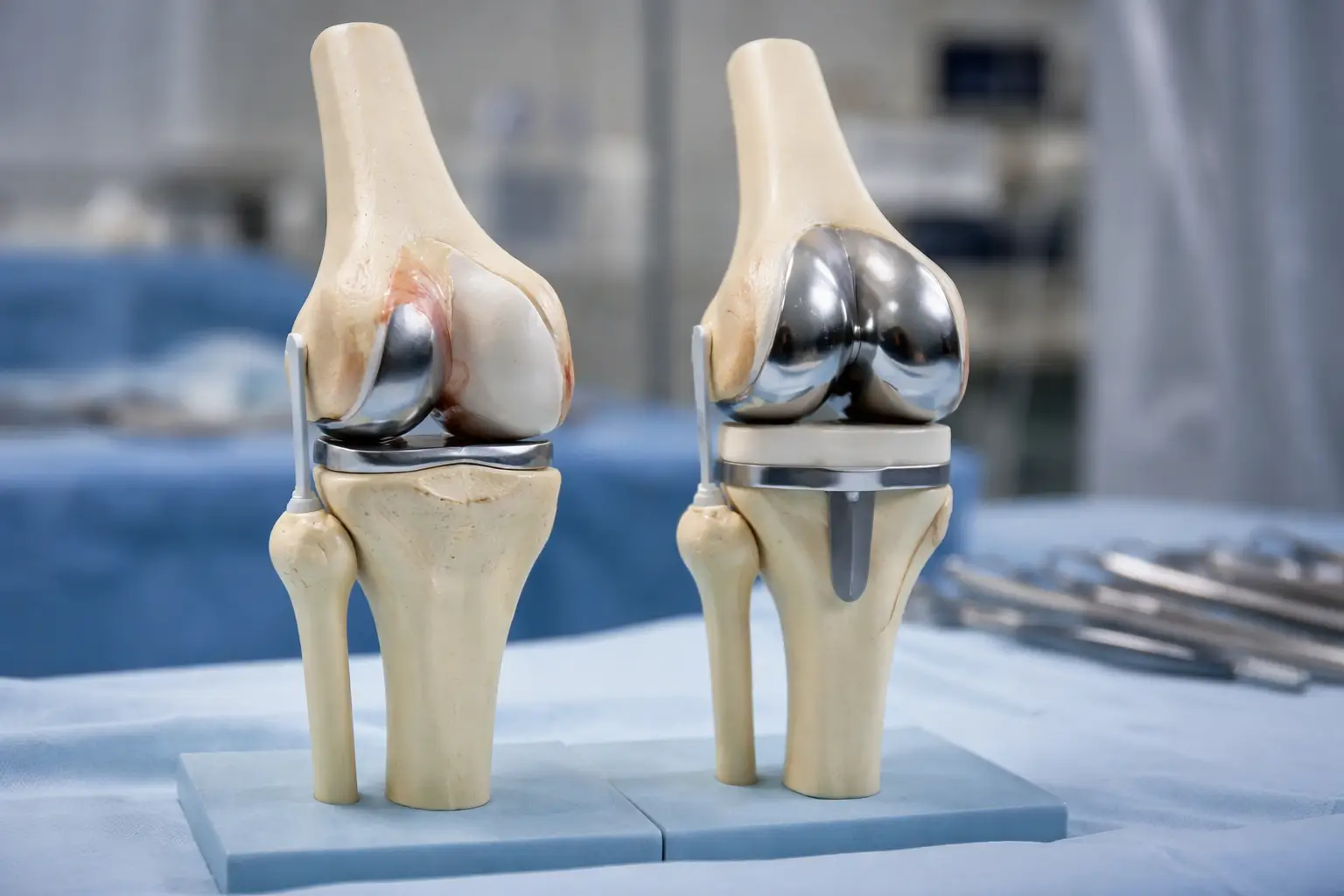
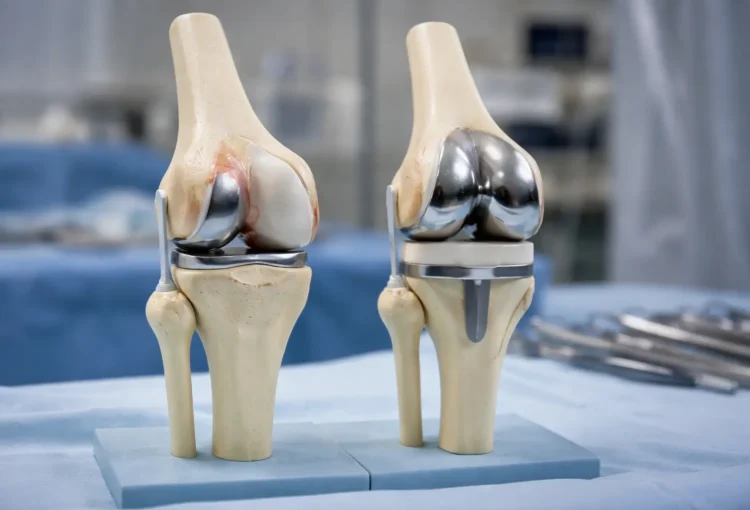
Partial knee replacement surgery, also called unicompartmental knee replacement, addresses arthritis that is confined to one area of the knee. Rather than replacing the entire joint, the surgeon resurfaces only the damaged compartment while preserving healthy bone, cartilage, and ligaments.
How Partial Knee Replacement Works
The knee has three compartments: medial (inner), lateral (outer), and patellofemoral (front). Suppose arthritis affects only one of these areas; a partial knee replacement may be considered.
During surgery, the damaged surfaces are replaced with metal and plastic components, while the rest of the knee remains intact.
Who Is a Candidate for Partial Knee Replacement?
Only an orthopedic specialist can determine who is a candidate for partial knee replacement. However, certain factors may play a role in the recommendation, including:
- Arthritis is limited to a single knee compartment
- Stable ligaments, particularly the ACL
- Good knee alignment
- No significant stiffness or deformity
It’s important to note that these are general considerations, not requirements. Imaging studies and a thorough clinical evaluation are essential to determine whether partial knee replacement is appropriate.
Partial Knee Replacement Benefits and Limitations
Benefits
- Smaller incision and less invasive surgery
- Faster recovery compared to total knee replacement surgery
- More natural-feeling knee motion
- Preservation of healthy bone and tissue
Limitations
- Not suitable for widespread arthritis
- Arthritis may progress in other compartments over time
- Some patients may eventually need a total knee replacement
What Is Total Knee Replacement?
Total knee replacement, also called total knee arthroplasty, replaces the damaged surfaces in all three compartments of the knee. It is typically recommended for people with advanced arthritis that affects more than one area of the joint.
How Total Knee Replacement Works
During total knee replacement, damaged cartilage and bone are removed from the femur, tibia, and underside of the kneecap. These surfaces are replaced with prosthetic components designed to restore alignment, stability, and smooth movement.
When Total Knee Replacement Is Recommended
Total knee replacement may be recommended when:
- Arthritis affects more than one compartment
- Knee pain is severe and persistent
- Stiffness significantly limits mobility
- Non-surgical treatments no longer provide relief
As with partial replacement, the decision is guided by clinical findings, imaging results, and functional limitations, not preference alone.
Total Knee Replacement Pros and Cons
Pros
- Reliable pain relief for advanced arthritis
- Addresses extensive joint damage
- Long-lasting and well-studied outcomes
Cons
- Longer recovery and rehabilitation
- More extensive surgery
- Some patients report a less “natural” knee feel
Partial Knee Replacement vs. Total Knee Replacement: Key Differences
When comparing partial knee replacement vs total knee replacement, several factors stand out:
- Amount of Joint Replaced: Partial replaces one compartment; total replaces the entire joint
- Surgical Invasiveness: Partial knee surgery is less invasive
- Recovery Time: Partial vs total knee surgery recovery time is often shorter for partial procedures
- Longevity: Total knee replacements may be more durable for widespread or severe arthritis
Cost can also vary. Partial knee vs full knee replacement cost depends on the procedure, hospital stay, rehabilitation needs, and insurance coverage.
Which Option Is Right for You?
Only a qualified orthopedic provider can determine which knee replacement option is best for you. While patients often research options online, self-selection is not recommended.
Factors That May Influence the Recommendation
Your provider may consider:
- Age and overall health
- Activity level and lifestyle goals
- Severity and location of arthritis
- Extent of joint damage
- Knee stability and alignment
These factors may influence the recommendation, but they do not replace professional medical judgment.
Importance of Orthopedic Evaluation and Imaging
A comprehensive evaluation, including physical examination, X-rays, and sometimes an MRI, allows your specialist to assess the entire knee joint. This ensures the chosen procedure addresses your specific condition and supports the best possible outcome.
Final Thoughts and Next Steps
Understanding the difference between partial and total knee replacement helps you have more meaningful conversations with your orthopedic specialist. Both procedures offer effective pain relief and improved mobility when used for the right patient and condition.
If knee pain is limiting your daily life, consulting an orthopedic specialist is the best next step. The experienced team at OPAOrtho can provide a personalized evaluation to determine whether partial knee replacement, total knee replacement, or another treatment option is most appropriate for you and your long-term joint health. Visit one of our convenient locations to connect with an orthopedic specialist and begin your path toward improved mobility and comfort.