
Comminuted Fracture vs Simple Fracture: Causes, Symptoms & Treatment
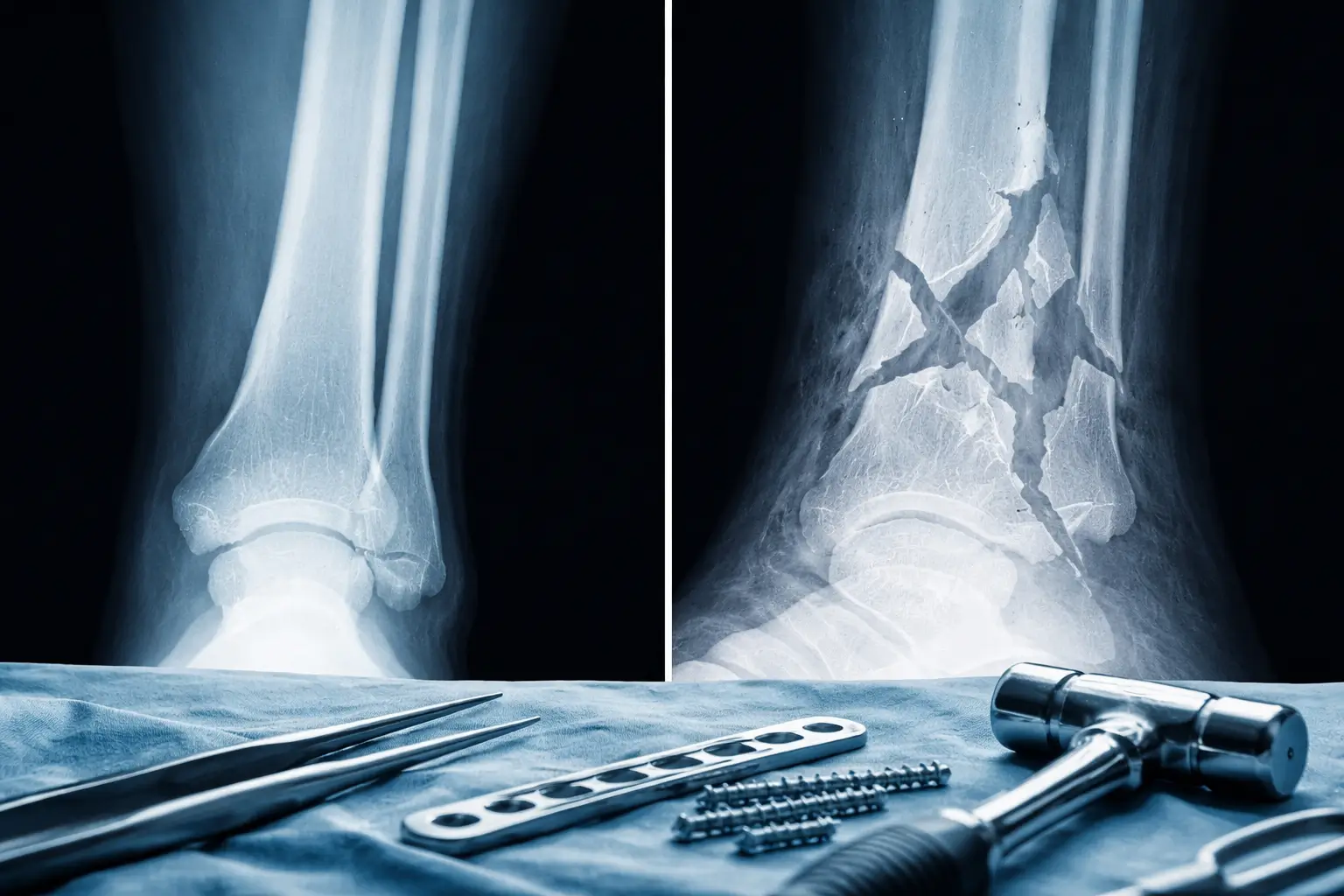
A bone fracture is a break in the bone that occurs when the bone experiences more force than it can withstand. Fractures can happen during falls, sports injuries, car accidents, or other traumatic events. Some fractures are minor and heal quickly, while others are more complex and require evaluation and specialized treatment by a qualified physician.
Understanding different types of bone fractures is important because the severity of the injury can affect treatment, recovery time, and long-term outcomes. Two common fracture types are simple fractures and comminuted fractures. Knowing the difference between simple and comminuted fracture patterns can help patients understand their injury and what to expect during recovery.
This guide explains comminuted fracture vs simple fracture, including causes, symptoms, diagnosis, treatment options, and recovery timelines.
What Is a Simple Fracture?
A simple fracture definition refers to a break where the bone separates into two pieces without piercing the skin. This injury is also called a closed fracture because the skin remains intact.
Simple fractures often occur after moderate impacts such as falls, sports injuries, or direct blows to a bone. Because the bone breaks into only two pieces, the structure usually remains relatively stable.
Common characteristics of a simple fracture include:
- A clean break in the bone
- Two bone fragments rather than multiple pieces
- No open wound or exposed bone
Simple fractures commonly affect areas such as the wrist, collarbone, ankle, or forearm. These injuries are usually easier to stabilize and often heal well with proper care.
Even though simple fractures are typically less severe, medical evaluation is still important to ensure the bone heals correctly.
What Is a Comminuted Fracture?
To understand the meaning of a comminuted fracture, it helps to look at how the bone breaks. A comminuted fracture occurs when the broken bone shatters into three or more pieces.
This type of injury is usually caused by high-impact trauma such as car accidents, severe sports injuries, or falls from significant heights. Because the bone fragments into multiple pieces, the fracture is often unstable and more difficult to treat.
Factors that can increase the risk of a comminuted fracture include:
- High-energy trauma or accidents
- Severe sports injuries
- Falls from height
- Bone weakness from osteoporosis
Comminuted fractures often affect larger bones such as the femur, tibia, or humerus. Because the bone is fragmented, these injuries frequently require surgery to stabilize the pieces and allow proper healing.
Comminuted Fracture vs Simple Fracture: Key Differences
When comparing comminuted fracture vs simple fracture, the main difference lies in how the bone breaks.
A simple fracture results in two bone pieces, while a comminuted fracture produces several fragments. This structural difference can affect injury severity, treatment, and healing time.
Key differences include:
Number of bone fragments
- Simple fracture: two bone pieces
- Comminuted fracture: three or more fragments
Injury severity
- Simple stress fractures are often caused by moderate force
- Comminuted fractures usually occur after high-impact trauma
Treatment approach
- Simple fractures may heal with casting or splinting
- Comminuted fractures may require surgical stabilization
Recovery time
- Simple fractures typically heal faster
- Comminuted fractures often require longer recovery
Understanding bone fracture types explained in this way helps patients see why treatment plans may differ.
Symptoms of Each Type
Many symptoms are shared across different bone fracture types. However, severity can vary depending on whether the fracture is simple or comminuted.
Common fracture symptoms include:
- Sudden pain at the injury site
- Swelling or bruising
- Difficulty moving the injured limb
- Tenderness around the affected area
Simple fractures often cause localized pain and swelling. The bone may remain relatively stable, although movement can be painful.
Comminuted fractures may cause more severe symptoms. Because the bone breaks into multiple pieces, patients may experience intense pain, significant swelling, or visible deformity.
Any injury involving severe pain, loss of movement, or obvious deformity should be evaluated by a medical professional.
Diagnosis
Accurate diagnosis helps determine the difference between simple and comminuted fracture injuries.
A healthcare provider will typically begin with a physical exam to evaluate swelling, tenderness, and range of motion. If a fractured bone is suspected, imaging tests are used to confirm the diagnosis.
Common diagnostic tools include:
- X-rays to identify bone breaks and alignment
- CT scans for detailed images of complex fracture sites
- MRI scans to assess surrounding tissue damage
These tests help doctors determine the fracture type and guide the most appropriate treatment plan.
Treatment Options
Treatment depends on the type of fracture, the bone involved, and the patient’s overall health.
Simple fracture treatment often focuses on stabilizing the bone while it heals naturally. This may include placing the injured limb in a cast or splint.
Simple fracture treatment options may include:
- Casting or splinting
- Rest and limited movement
- Pain management medication
- Follow-up imaging to monitor healing
Comminuted fracture treatment is usually more complex. Because the bone fragments are unstable, surgery may be required to reposition and secure the pieces.
Surgical treatment may involve plates, screws, rods, or external fixation devices. After stabilization, physical therapy may help restore strength and movement.
Recovery and Healing Time
Healing time varies depending on the type of fracture and the patient’s overall health.
Simple fractures typically heal within six to eight weeks. Recovery may take longer if the injury affects weight-bearing bones.
Comminuted fractures usually require a longer healing period because multiple bone fragments must repair and reconnect. Recovery may take several months and may include rehabilitation exercises.
Factors that influence healing include:
- Fracture severity
- Bone location
- Patient age and bone health
- Adherence to treatment and therapy
Regular follow-up appointments help ensure the bone is healing properly.
Conclusion
Understanding comminuted fracture vs simple fracture helps patients recognize the severity of their injury and what treatment may involve. A simple fracture typically involves a clean break into two pieces and often heals with immobilization. A comminuted fracture involves multiple fragments and may require surgical stabilization.
If you suspect a bone injury after an accident or fall, seeking medical care is important. An orthopedic specialist at a convenient location can diagnose the fracture type and recommend the most effective treatment to support proper healing and recovery.