
Disc Herniation: What You Need to Know
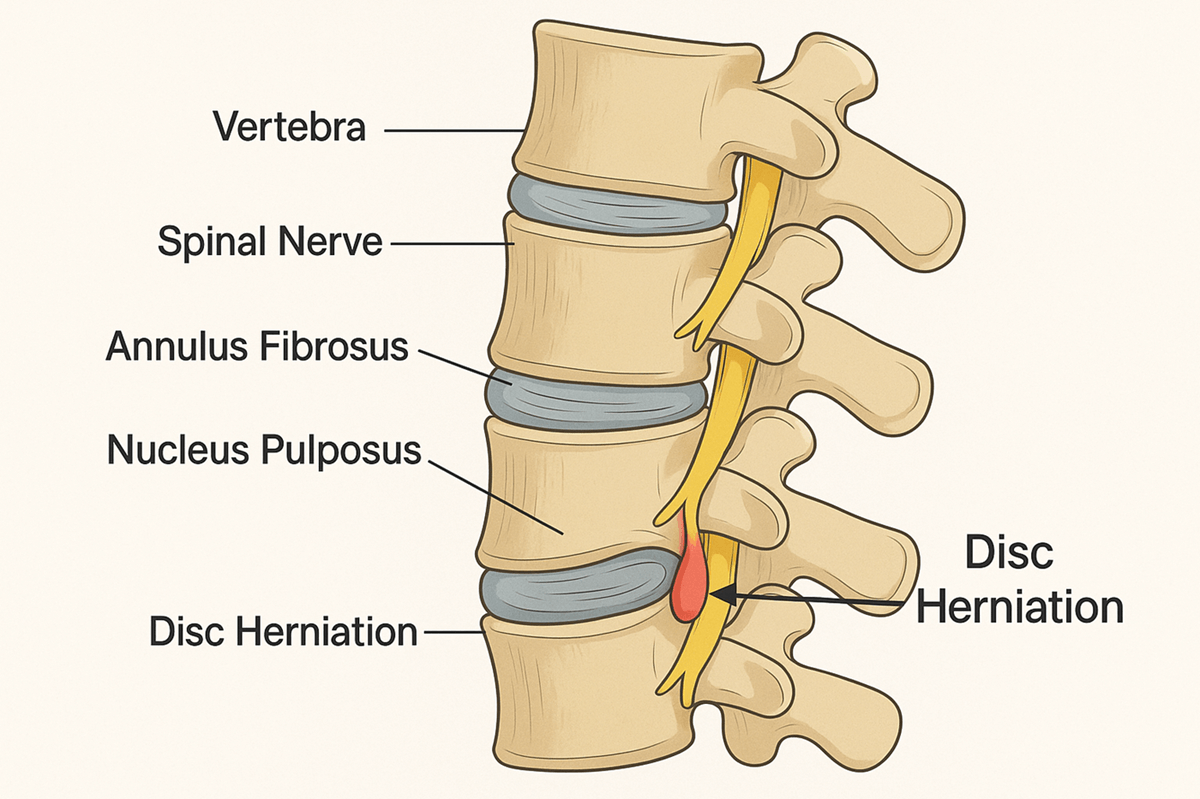
Disc herniation is a common spinal condition that can cause back or neck pain, numbness, or weakness in the arms or legs. It can develop suddenly after an injury or gradually over time from normal wear and tear.
While it can sound intimidating, many cases improve with the right care and lifestyle changes.
This guide explains what a disc herniation is, its causes and symptoms, and the most effective treatment options available.
You’ll also learn how to prevent spinal disc herniation and when to seek medical help.
What Is a Disc Herniation?
Your spine is made up of a column of bones called vertebrae. Between each vertebra sits a cushion-like disc that absorbs shock and helps your spine move smoothly. Each spinal disc contains a soft, gel-like core called the nucleus pulposus, surrounded by a strong, flexible outer ring known as the annulus fibrosus.
When part of that inner material pushes through a tear in the outer layer, it’s called a disc herniation. This can press on nearby nerves, causing pain, tingling, or weakness. Some people refer to it as a “slipped disc,” but the disc itself doesn’t actually slip; it just bulges or ruptures slightly.
Disc Bulge vs Herniation
A disc bulge means the outer layer of the disc stretches outward but remains intact. In contrast, a herniation occurs when the inner gel leaks through, putting pressure on spinal nerves. Both can cause discomfort, but a herniated disc typically leads to more intense symptoms.
Disc Protrusion vs Herniation
A disc protrusion is a mild form of herniation where only a small portion of the disc extends out. A true herniation means the disc material has broken through the outer layer. Understanding these differences helps doctors plan the right treatment.
Causes of Disc Herniation
A lumbar disc herniation (in the lower back) or cervical disc herniation (in the neck) can result from several factors.
Age-Related Degeneration
As we age, spinal discs naturally lose flexibility and hydration. This makes them more likely to tear or rupture, even during simple movements like bending or twisting.
Mechanical Strain
Frequent heavy lifting, poor posture, or repetitive motions can place stress on the cervical spine. Over time, this strain can weaken the disc walls and lead to herniation.
Sudden Injury
Accidents, sports injuries, or sudden movements can cause the disc’s inner material to push through its outer layer. Though less common, trauma can trigger immediate symptoms.
Risk Factors
Certain lifestyle habits and physical conditions can increase your chances of developing a herniated disc.
Lifestyle and Health-Related Risks
- Obesity: Extra body weight adds stress to the lower back.
- Sedentary lifestyle: Weak core muscles offer less support for the lumbar spine.
- Poor fitness: Limited flexibility and core strength raise your risk.
Environmental & Behavioral Factors
- Smoking: Reduces oxygen flow to spinal tissues, slowing healing.
- Occupational strain: Jobs requiring heavy lifting or long hours of sitting increase spinal stress.
- Genetics: A family history of spinal problems can make you more prone to disc herniation.
Symptoms to Watch For
The symptoms of a herniated disc depend on where it occurs and which nerves are affected.
General Disc Herniation Symptoms
- Localized pain in the back or neck
- Pain that radiates down the arms or legs
- Sharp, burning, or aching sensations
Neurological Signs
- Tingling or numbness in limbs
- Muscle weakness or reduced reflexes
- Trouble standing, walking, or gripping objects
Region-Specific Symptoms
- Lumbar disc herniation: Pain or numbness radiating to the buttocks, legs, or feet (often known as sciatica).
- Cervical disc herniation: Pain that travels from the neck into the shoulders, arms, or hands.
- Thoracic disc herniation: A rare type that can cause chest, rib, or abdominal pain.
- Central disc herniation: May press directly on the spinal cord, causing balance problems or weakness in multiple limbs.
If your pain feels severe or the symptoms persist than a few weeks, it’s important to get evaluated by a spine specialist.
How Disc Herniation Is Diagnosed
Diagnosing a spinal disc herniation usually begins with a physical exam and a detailed medical history. Your doctor will ask about your symptoms and how they affect daily activities.
Medical Evaluation
A physical exam checks for muscle strength, reflexes, and nerve sensitivity. You may be asked to move or raise your legs to help pinpoint nerve compression.
Imaging Tests
- MRI scans provide clear images of the discs and nerves, making them the gold standard for diagnosis.
- CT scans or X-rays can help identify bone or alignment issues.
- Nerve conduction studies may be used to measure how well your nerves send signals.
Treatment Options
Most people with a herniated disc improve with non-surgical treatment. The goal is to relieve pain, restore movement, and prevent future injury.
Conservative (Non-Surgical) Treatments
- Rest and gentle activity: Short rest followed by light movement helps reduce stiffness.
- Medications: Over-the-counter pain relievers and anti-inflammatory drugs can ease discomfort.
- Physical therapy: Stretching, strengthening, and posture correction exercises improve spine health.
Interventional Treatments
If pain persists, doctors may recommend epidural steroid injections to reduce inflammation around the affected nerve root.
Surgical Options
When symptoms are severe or non-surgical care fails, surgery may be necessary.
- Microdiscectomy: Removes the portion of the disc pressing on the nerve.
- Laminectomy: Relieves pressure by removing a small section of bone over the spinal canal.
Surgery is typically successful in relieving nerve pain and restoring mobility.
Managing Chronic or Recurrent Herniation
If disc problems return, long-term management may include targeted exercise, posture therapy, and periodic medical monitoring.
Lifestyle & Prevention Tips
Keeping your spine healthy is key to avoiding future disc issues.
Posture and Ergonomics
- Sit and stand with your shoulders back and spine aligned.
- Use ergonomic chairs and workstations that support your lower back.
- Lift heavy objects by bending your knees, not your waist.
Exercise and Core Strength
- Engage in low-impact workouts such as swimming, walking, or yoga.
- Strengthen core and back muscles to provide spinal support.
- Stretch daily to maintain flexibility and reduce tension.
Nutrition and Weight Control
- Maintain a healthy weight to reduce pressure on your spine.
- Stay hydrated, water keeps spinal discs supple and flexible.
- Eat a balanced diet rich in calcium, vitamin D, and protein.
Avoiding Re-Injury
- Take breaks from sitting or repetitive tasks.
- Listen to your body, don’t push through sharp pain.
- Continue gentle exercise even after recovery to maintain strength.
When to See a Doctor
Red Flag Symptoms
- Severe pain that doesn’t improve after rest or medication
- Persistent numbness, tingling, or muscle weakness
- Difficulty walking, standing, or lifting objects
Emergency Situations
Seek immediate medical attention if you experience:
- Loss of bladder or bowel control
- Sudden weakness or loss of coordination
- Numbness in the groin area
These could indicate a rare but serious condition requiring urgent care.
Conclusion
A disc herniation can be painful and frustrating, but it’s also highly treatable. With early diagnosis, proper care, and a proactive approach to spinal health, most people recover well and return to normal activities.
Remember, prevention starts with good posture, regular exercise, and a healthy lifestyle. If you’re experiencing back or neck pain that isn’t improving, the spine specialists at OPA Ortho are here to help.
Don’t wait; getting the right diagnosis and treatment early can make all the difference for your spine and your quality of life.