
Understanding Pickleball Injuries
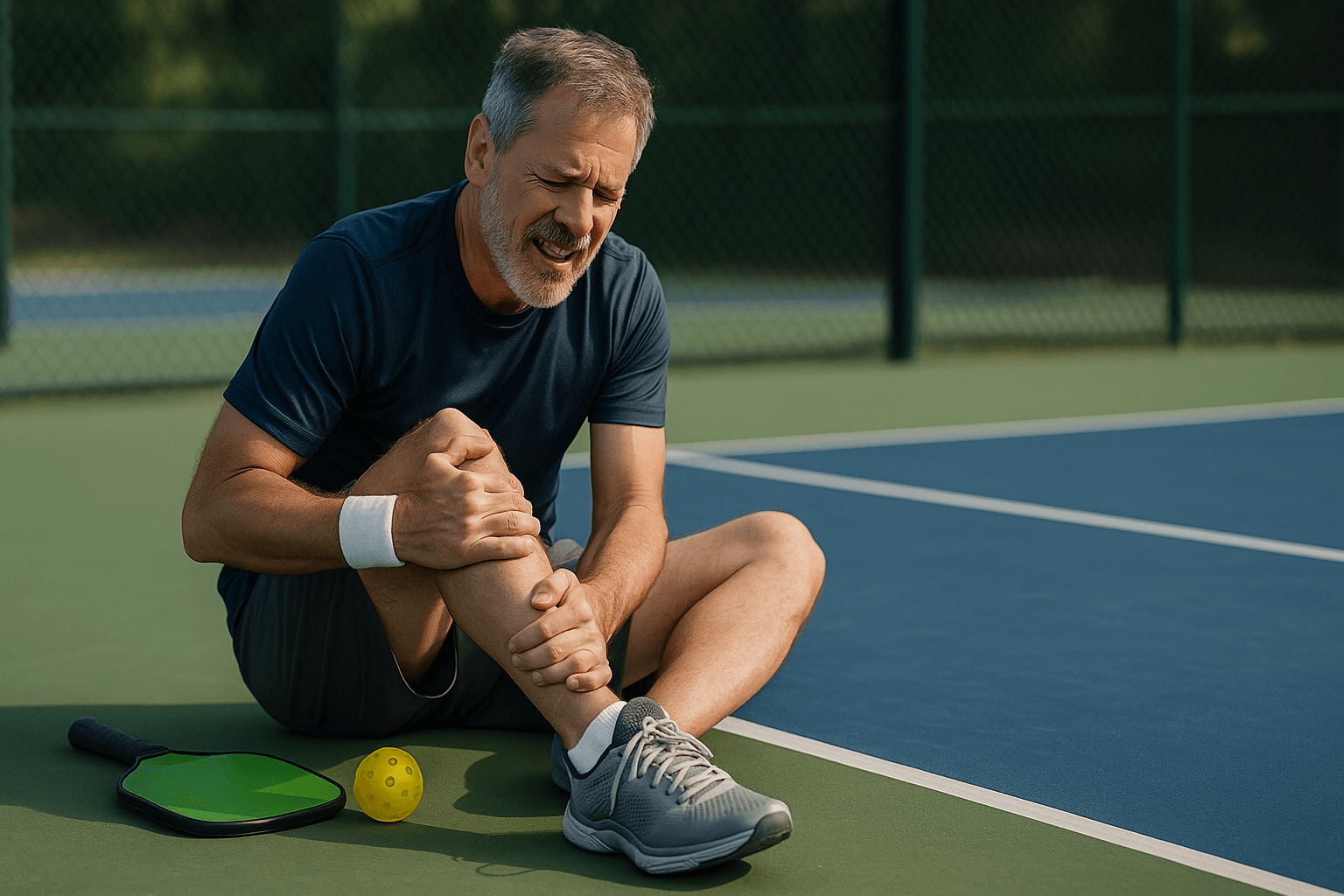
Pickleball has taken the United States by storm. What began as a backyard pastime has become one of the fastest-growing sports in the country, attracting players of all ages, especially adults over 50. The game’s quick rallies, friendly competition, and social atmosphere make it easy to love.
But with this growing popularity has come a rise in injuries. Quick direction changes, repetitive motions, and hard court surfaces can all take a toll, especially on players who are new to the sport or returning to physical activity after years away.
Learning about the most common pickleball injuries and how to avoid them can help you stay active, injury-free, and ready to enjoy more time on the court.
The Rise of Pickleball—and Its Growing Injury Risks
America’s Fastest-Growing Sport
Pickleball combines the best of tennis, badminton, and ping-pong. It’s easy to learn, low-impact, and great for staying fit and social. In fact, millions of Americans now play regularly, with adults over 50 making up one of the largest player groups.
Why Injuries Are Increasing
More players mean more potential for injury. Unlike traditional racket sports, playing pickleball’s smaller court and faster pace lead to quick sprints, stops, and pivots. These movements can strain muscles and joints, particularly when players skip warm-ups or use the wrong shoes.
Overuse and poor conditioning are also major contributors, especially for those who jump into frequent play too quickly.
Who Is Most at Risk for Pickleball Injuries
Older Adults and Seniors
Seniors are the most at-risk group for pickleball injuries. As we age, balance, flexibility, and bone density naturally decrease. This makes it easier to twist an ankle, strain a tendon, or suffer a fall. Older players also tend to have pre-existing joint issues such as arthritis, which can flare up during high-intensity play.
New or Infrequent Players
Beginners often play enthusiastically but without proper conditioning or technique. Without stretching or cross-training, the body isn’t ready for the sudden, repetitive motions of pickleball. This can lead to muscle strains, sprains, and overuse injuries after only a few games.
Players with Previous Injuries or Chronic Conditions
Individuals with existing knee, shoulder injuries, or Achilles tendon problems should be cautious. Old acute injuries can resurface quickly with repetitive motion and sudden lateral movements. Proper warm-ups and gradual return to play are essential to prevent re-injury.
The Most Common Pickleball Injuries
Sprains and Strains
Ankle Sprains
Ankle sprains are among the most frequent pickleball injuries. They typically occur when players land awkwardly or pivot too fast. The ligaments stretch or tear, causing pain, swelling, and instability.
Knee Sprains and Strains
Quick lateral movements can twist the knee, straining ligaments such as the ACL or MCL. Players with weaker thigh muscles or existing knee problems are especially vulnerable.
Wrist Strains
When players fall, the natural reaction is to catch themselves with an outstretched hand. This puts stress on the wrist, leading to strains or sprains.
Fractures
Wrist and Forearm Fractures
Falls are a leading cause of wrist and forearm fractures in pickleball. Even minor slips can cause significant injury if a player lands on a rigid, extended arm.
Shoulder or Elbow Fractures
Though less common, a hard collision or fall can result in a break or dislocation in the upper arm or shoulder. Older adults are particularly at risk due to reduced bone density.
Overuse Injuries
“Pickleball Elbow”
Much like tennis elbow, pickleball elbow is an overuse injury affecting the tendons on the outside of the forearm. It’s caused by repetitive paddle swings and gripping the handle too tightly.
Shoulder Tendinitis
Frequent overhead serves and smashes can inflame the rotator cuff tendons, leading to stiffness and pain.
Achilles Tendonitis
The Achilles tendon is vulnerable during sudden bursts or direction changes. Tight calf muscles and inadequate stretching make this condition more likely.
Falls and Acute Trauma
Falls are a leading cause of the worst pickleball injuries. They often happen when players lose balance, backpedal for a lob, or collide with another player. A single fall can lead to fractures, sprains, or even head injuries.
Pickleball Eye Injuries
A fast-moving ball can easily strike the eye at close range, causing bruising, bleeding, or vision damage. Eye protection is strongly recommended for all players.
Foot and Ankle Injuries
Foot pain and repetitive stress fractures can develop from improper footwear or hard court impact. Shoes without lateral support can also increase the risk of twisting injuries.
Why Do Pickleball Injuries Happen?
Key Injury Mechanisms
Quick Direction Changes and Deceleration
Pickleball demands constant movement, sprinting, stopping, and pivoting. These rapid motions stress joints and muscles, especially if the player’s form or balance is off.
Falls and Loss of Balance
Fatigue, uneven courts, or slippery surfaces can easily lead to falls. Many chronic injuries occur when players backpedal or try to reach for difficult shots.
Inadequate Warm-Up or Stretching
Cold muscles are stiff and less flexible, making them more prone to tears or pulls. Skipping warm-ups before a match is one of the most common injury triggers.
Pre-Existing Joint Issues
Players with arthritis or prior joint injuries are more likely to experience inflammation and pain due to repetitive impact and strain.
Environmental and Equipment Factors
Hard court surfaces and worn-out shoes amplify stress on joints. Using the wrong footwear, such as running shoes instead of court shoes, can reduce traction and stability, increasing the likelihood of falls and sprains.
How to Prevent Pickleball Injuries
Warm-Up and Cool-Down Routines
Start every game with five to ten minutes of light activity, such as brisk walking, leg swings, or arm circles, to get the blood flowing. After playing, spend a few minutes stretching to maintain flexibility and aid recovery.
Proper Footwear and Equipment
Always wear court shoes designed for lateral movement. They provide the support and grip needed for quick starts and stops. Protective eyewear and ergonomic paddles can also help reduce injury risks.
Strength and Flexibility Training
Off-court conditioning is key. Strengthening the legs, core, and shoulders improves stability and reduces stress on joints. Flexibility exercises like yoga or dynamic stretching help prevent overuse injuries.
Gradual Progression and Recovery
Increase your playtime gradually, and avoid jumping from one casual game to daily tournaments. Take regular rest days, and listen to your body when it signals fatigue or soreness.
Smart Court Awareness
Stay alert and communicate with your doubles partner. Avoid chasing unreachable balls or backing up blindly. Awareness of the court and your surroundings helps prevent collisions and falls.
What to Do If You Get Injured
Initial Self-Care
The R.I.C.E. Method
At the first sign of injury, follow R.I.C.E.:
- Rest: Stop playing and allow the injured area to recover.
- Ice: Apply ice for 15–20 minutes several times a day.
- Compression: Use an elastic bandage to reduce swelling.
- Elevation: Keep the injured area raised above heart level.
If pain or swelling doesn’t improve within a few days, seek medical attention.
When to Seek Medical Help
Consult a doctor or physical therapist if you experience:
- Persistent pain or stiffness
- Swelling that doesn’t subside
- Difficulty bearing weight or moving the joint
- Signs of bruising, deformity, or numbness
An orthopedic specialist can diagnose the issue and recommend appropriate treatment, from physical therapy to imaging or injections.
Recovery and Return to Play
Recovery time varies depending on the injury. Mild sprains may heal in a week or two, while fractures or tendon injuries can take several months. A guided rehabilitation program from a sports medicine or orthopedic provider helps restore strength and mobility safely.
Balancing Fun and Safety in Pickleball
The Benefits Still Outweigh the Risks
Despite the injury potential, pickleball remains one of the most enjoyable and health-boosting sports around. It promotes cardiovascular fitness, coordination, and social interaction. By understanding your limits and preparing your body, you can enjoy the game for years.
Encouragement for Long-Term Play
Commit to consistent conditioning and smart play habits. Join a coached or supervised session to refine your technique and reduce unnecessary strain. Staying proactive about your health will help you keep competing, and smiling, on the court.
Conclusion
Pickleball injuries are common, but most can be prevented with preparation and awareness. Warm up properly, wear supportive footwear, build strength and flexibility, and never ignore pain.
If you’re dealing with persistent pain or suspect an injury, don’t wait to get checked.
The team at OPA Ortho offers expert evaluation, treatment, and prevention strategies for pickleball players of all ages. Stay active, stay safe, and keep enjoying the sport you love, with confidence and care.