
Radiculopathy Explained: Why Pinched Nerves Cause Pain
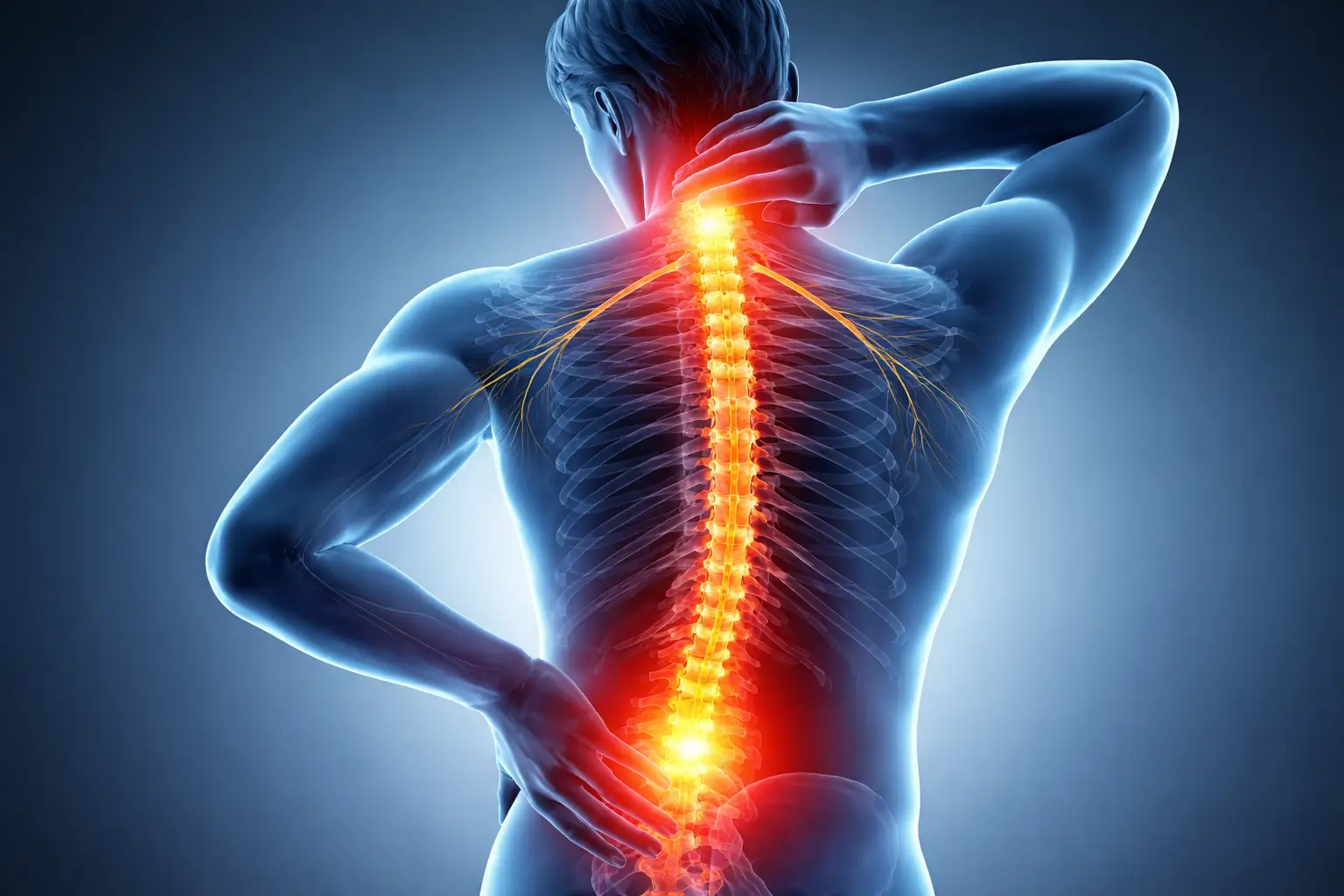
Neck or back pain that travels into your arm or leg can feel sharp, burning, or electric. This type of radiating pain is often caused by radiculopathy, commonly called a pinched nerve.
Radiculopathy happens when a nerve root in the cervical spine becomes compressed or irritated. Because spinal nerves control sensation and movement in different parts of the body, pressure on one of these nerves can cause symptoms far from the spine itself.
This guide explains what radiculopathy is, what it feels like, how it’s diagnosed, and what treatment options may help.
What Is Radiculopathy?
Radiculopathy occurs when a spinal nerve root is compressed, inflamed, or irritated. Nerve roots branch off the spinal cord and exit through small openings between the vertebrae. These nerves send signals between your brain and body.
When a nerve root is pinched, it disrupts normal nerve function. This can cause pain, numbness, tingling, or weakness along the path of the affected nerve.
In simple terms, radiculopathy is nerve pain that begins in the spine and radiates outward into the arms or legs.
How a Pinched Nerve Causes Pain
Pressure on a nerve root can:
- Trigger inflammation
- Interfere with nerve signals
- Cause radiating pain
- Lead to muscle weakness
Because nerves travel through the arms and legs, symptoms often extend beyond the back or neck.
Types of Radiculopathy
Radiculopathy is classified by the area of the spine involved.
Cervical Radiculopathy (Neck)
Cervical radiculopathy affects nerve roots in the neck.
Cervical radiculopathy symptoms may include:
- Neck pain
- Pain radiating into the shoulder or arm
- Numbness or tingling in the hand
- Weak grip strength
Symptoms often occur on one side.
Thoracic Radiculopathy (Mid-Back)
Thoracic radiculopathy is less common. It may cause:
- Pain wrapping around the chest or ribs
- Burning or shooting discomfort in the torso
Because it is rare, it may be mistaken for other conditions.
Lumbar Radiculopathy (Lower Back)
Lumbar radiculopathy is the most common type.
Lumbar radiculopathy symptoms may include:
- Lower back pain
- Pain that travels into the buttock or leg
- Tingling in the foot
- Leg weakness
- Pain that worsens with sitting or bending
Radiculopathy vs Sciatica: What’s the Difference?
Radiculopathy is the general medical term for nerve root compression in the spine.
Sciatica is a specific type of lumbar radiculopathy that affects the sciatic nerve, usually causing pain down one leg.
In short:
- All sciatica is radiculopathy.
- Not all radiculopathy is sciatica.
A proper diagnosis helps determine the right treatment plan.
Common Causes of Radiculopathy
Several spinal conditions can lead to a cervical radiculopathy pinched nerve root, including:
- Herniated or bulging discs
- Degenerative disc disease
- Bone spurs
- Spinal stenosis
- Injury or trauma
Age-related wear and tear is one of the most common reasons nerve compression develops.
Symptoms of Radiculopathy
Symptoms depend on the affected nerve but commonly include:
- Sharp, shooting pain
- Burning sensation
- Numbness
- Tingling (“pins and needles”)
- Muscle weakness
Many people ask, “What does a pinched nerve feel like?” It often feels different from muscle soreness. The pain may radiate along a specific path and may worsen with certain movements.
How Is Radiculopathy Diagnosed?
If symptoms persist, a medical evaluation is important.
Medical History and Physical Exam
A provider will review:
- Where the pain travels
- How long symptoms have lasted
- What makes them worse or better
A physical exam may include strength testing, reflex checks, and range-of-motion assessment.
Imaging and Diagnostic Tests
Imaging may help confirm the cause of nerve compression. Tests can include:
- X-rays to assess alignment
- MRI scans to view discs and nerves
- CT scans for bone detail
- EMG or nerve studies to evaluate nerve function
Accurate diagnosis ensures the treatment plan addresses the specific problem.
Treatment Options for Radiculopathy
Treatment depends on symptom severity, the cause of compression, and overall health. A medical provider will determine what treatment is most appropriate after a full evaluation.
The goal is to reduce inflammation, relieve pain and nerve pressure, and restore function.
Non-Surgical Treatments
Many cases improve without surgery. Conservative options may include:
- Activity modification
- Physical therapy
- Anti-inflammatory medications
- Short-term oral steroids
- Epidural steroid injections
- Heat or ice therapy
Physical therapy can improve strength, flexibility, and posture.
When Surgery May Be Considered
Surgery may be recommended if:
- Pain is severe and persistent
- Weakness worsens
- Conservative care fails to relieve symptoms
- Imaging shows significant nerve compression
Procedures may involve removing part of a herniated disc or enlarging the space around the nerve.
The decision to pursue surgery is individualized and based on clinical findings. A spine specialist will determine whether surgery is necessary.
How Long Does Radiculopathy Last?
Many patients ask, “How long does radiculopathy last?”
Mild cases may improve within several weeks. Moderate cases can take a few months. Recovery depends on:
- The underlying cause
- Severity of compression
- Overall health
- Response to treatment
Can Radiculopathy Heal on Its Own?
Yes, some cases improve naturally as inflammation decreases. However, persistent or worsening symptoms should be evaluated to prevent long-term nerve problems.
When to See a Doctor
Seek medical care if you experience:
- Severe or worsening pain
- Progressive muscle weakness
- Loss of coordination
- Symptoms lasting more than a few weeks
- Loss of bowel or bladder control (medical emergency)
Early diagnosis can help prevent complications and support faster recovery.
Frequently Asked Questions
Can radiculopathy heal without surgery?
Yes. Many patients improve with non-surgical treatment. Surgery is usually reserved for persistent or severe cases.
Is radiculopathy permanent?
Radiculopathy is often temporary when treated appropriately. Permanent nerve damage is uncommon but possible if severe compression goes untreated.
What is the difference between radiculopathy and sciatica?
Sciatica is a form of lumbar radiculopathy that affects the sciatic nerve. Radiculopathy is the broader term for spinal nerve root compression.
Final Thoughts
Radiculopathy, or a pinched nerve, can cause uncomfortable symptoms that interfere with daily life. The good news is that many cases improve with appropriate care.
If neck or back pain is radiating into your arms or legs, a medical evaluation can help identify the cause. The specialists at OPAOrtho provide comprehensive assessments and develop personalized treatment plans to support long-term relief and improved mobility. You can visit one of our convenient locations to receive expert orthopedic care tailored to your condition.