
What is SLAP Tear of the Shoulder
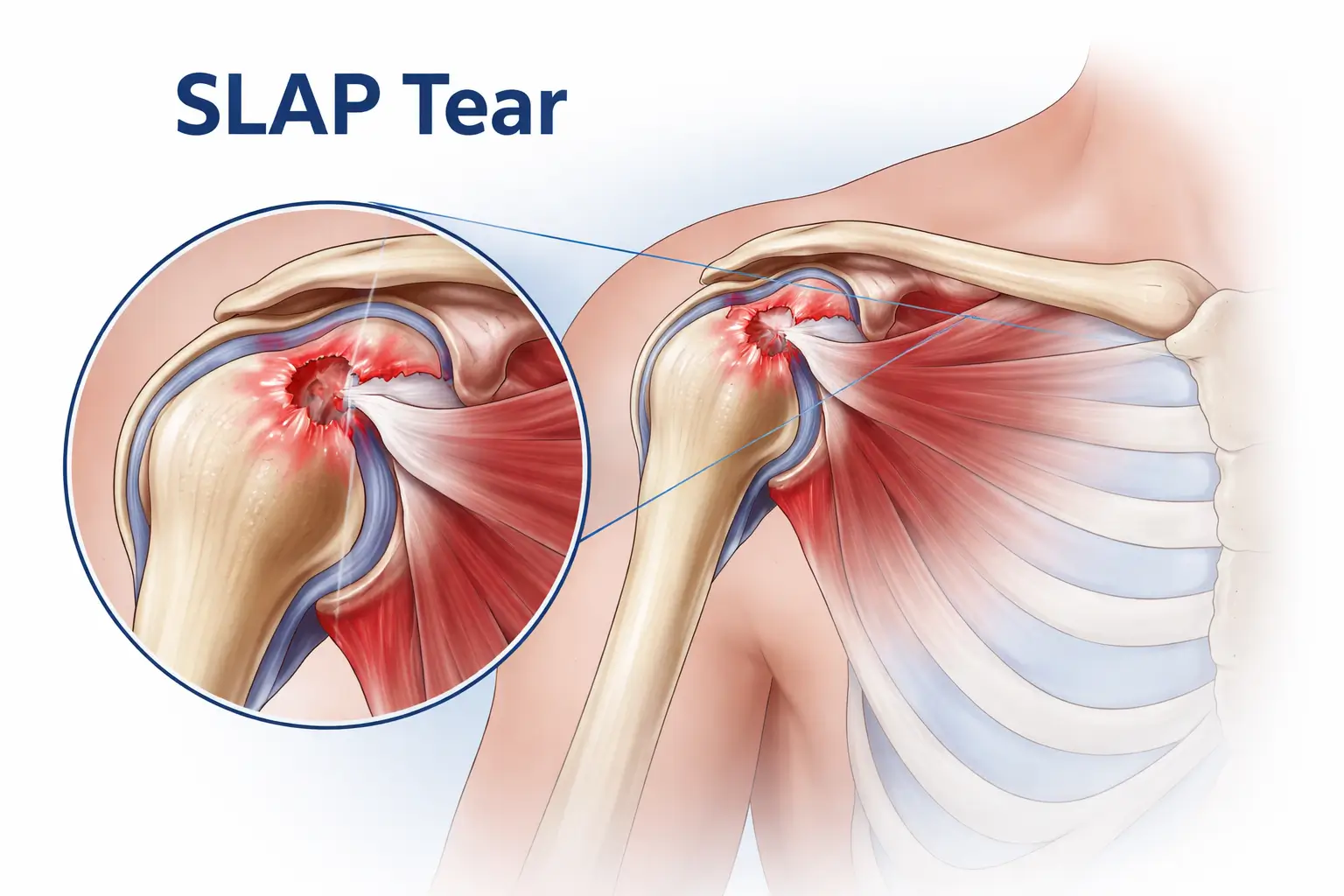
Shoulder pain that worsens with lifting, throwing, or reaching overhead can sometimes be caused by a SLAP tear. This type of injury affects the cartilage inside the shoulder joint and can lead to deep pain, weakness, and a catching sensation.
If you have been asking, “What is a SLAP tear?” or wondering whether your symptoms could be related to a SLAP tear shoulder injury, this guide explains what it means, what it feels like, how it is diagnosed, and what treatment options may help.
What Is a SLAP Tear?
A SLAP tear is a specific injury to the labrum of the shoulder. SLAP stands for Superior Labrum Anterior to Posterior. This describes the location of the tear at the top part of the labrum, where the biceps tendon attaches.
The labrum is a ring of cartilage that surrounds the shoulder socket. It helps stabilize the ball and socket joint and keeps the upper arm bone securely positioned. When this cartilage is torn, it can affect both stability and movement.
In simple terms, a SLAP tear is a cartilage injury at the top of the shoulder socket that can cause pain, weakness, and mechanical symptoms such as clicking or catching.
Types of SLAP Tears
SLAP tears are classified into different types based on how the labrum is damaged.
Type I
- Fraying of the labrum
- Often related to aging or gradual wear
Type II
- The labrum and biceps anchor detach from the socket
- One of the most common types that causes symptoms
Type III
- A bucket handle tear of the labrum
- The biceps tendon remains intact
Type IV
- A bucket handle tear that extends into the biceps tendon
The specific type of SLAP tear can influence both symptoms and treatment recommendations.
Common Causes of a SLAP Tear
A SLAP tear shoulder injury may develop suddenly or gradually over time.
Acute Slap Injury
Sudden trauma can cause a tear, including:
- Falling on an outstretched arm
- A direct blow to the shoulder
- Lifting or catching something heavy
- A sudden outstretched arm forceful pulling motion
Repetitive Overuse
Overhead motions place stress on the top of the labrum. This is common in:
- Baseball and softball pitchers
- Swimmers
- Tennis and volleyball players
- Weightlifters
Age Related Changes
As people get older, the labrum becomes less flexible and more prone to fraying. Degenerative tears may occur even without a single injury.
SLAP Tear Symptoms
SLAP tear symptoms can vary depending on the severity of the injury and activity level.
Common symptoms include:
- Deep shoulder pain
- Pain with overhead motion
- Clicking, popping, or grinding
- A catching or locking sensation
- Shoulder weakness
- A feeling of instability
What Does a SLAP Tear Feel Like?
Many patients ask, “What does a SLAP tear feel like?”
It often feels like a dull ache deep inside the joint. Certain movements, especially throwing or lifting overhead, may cause sharp pain. Some athletes describe a sudden loss of strength during activity.
Unlike simple muscle soreness, the pain may follow specific movements and may not improve with rest alone.
SLAP Tear vs Rotator Cuff Tear
It is common to compare a SLAP tear vs rotator cuff tear, since both injuries affect the shoulder.
Here is the key difference:
- A SLAP tear affects the labrum, which is the cartilage rim of the socket.
- A rotator cuff tear affects the tendons and shoulder muscles that lift and rotate the shoulder.
Rotator cuff tears often cause:
- Pain when raising the arm
- Weakness lifting overhead
- Night pain
SLAP tears more commonly cause:
- Clicking or catching
- Chronic shoulder pain with throwing
- Deep joint discomfort
In some cases, both injuries can occur together. A proper evaluation helps determine the exact cause of symptoms.
How Is a SLAP Tear Diagnosed?
If symptoms continue, a medical evaluation is important.
Medical History and Physical Exam
A provider will ask:
- When the pain started
- Whether there was a specific injury
- What movements make symptoms worse
During the exam, the provider may:
- Test shoulder strength
- Check range of motion
- Perform specific maneuvers to reproduce symptoms
Imaging Tests
Imaging may help confirm the diagnosis.
Tests can include:
- X-rays to rule out fractures or arthritis
- MRI scans to evaluate soft tissue
- MR arthrogram, which uses contrast dye to better detect labral tears
Because some labral changes are normal with aging, imaging findings are considered alongside symptoms and exam results. Diagnosis is based on the full clinical picture.
SLAP Tear Treatment Options
There are several SLAP tear treatment options, and the right approach depends on:
- The type of tear
- Symptom severity
- Age and activity level
- Overall shoulder function
- Whether other injuries are present
A medical provider will determine what treatment is most appropriate after a complete evaluation.
Non Surgical Treatment
Many patients improve without surgery.
Conservative care may include:
- Activity modification
- Anti inflammatory medications
- Physical therapy
- Short term oral steroids
- Corticosteroid injections in select cases
Physical therapy focuses on:
- Strengthening the rotator cuff
- Improving shoulder blade mechanics
- Restoring stability
- Reducing inflammation
For many individuals, especially non throwing athletes, this approach can significantly reduce pain and improve function.
Do SLAP Tears Require Surgery?
A common question is, “Do SLAP tears require surgery?”
Not always.
Surgery may be considered if:
- Pain remains severe despite conservative care
- Weakness persists
- Shoulder instability continues
- High demand overhead athletes cannot return to activity
Surgical options may include:
- Arthroscopic labral repair
- Debridement, which involves trimming damaged tissue
- Biceps tenodesis, which reattaches the biceps tendon to reduce stress on the labrum
The decision to pursue slap tear surgery is individualized and based on clinical findings and patient goals.
SLAP Tear Recovery Time
SLAP tear recovery time depends on whether treatment is surgical or non surgical.
Recovery Without Surgery
Mild to moderate cases may improve within several weeks to a few months. Recovery depends on:
- Consistency with therapy
- Severity of the tear
- Activity demands
Recovery After Surgery
Surgical recovery often takes several months.
Rehabilitation typically includes:
- Early protection with limited motion
- Gradual strengthening
- Progressive return to sport or work
Throwing athletes may require a longer return to play timeline.
Can a SLAP Tear Heal on Its Own?
Many patients ask, “Can a SLAP tear heal on its own?”
In some cases, symptoms improve as inflammation decreases and shoulder stability improves with therapy. While the cartilage may not fully regenerate, pain and function can improve significantly.
However, larger tears or persistent mechanical symptoms may not resolve without additional treatment. Ongoing pain or weakness should be evaluated to prevent long term problems.
Is a SLAP Tear Serious?
A SLAP tear can interfere with daily activities, work, or sports, especially those that require overhead motion.
The good news is that many cases respond well to appropriate treatment. Early evaluation helps guide the most effective care plan and reduces the risk of prolonged dysfunction.
When to See a Doctor
You should seek medical care if you experience:
- Shoulder pain lasting more than a few weeks
- Clicking or catching with pain
- Shoulder weakness
- Difficulty lifting the arm overhead
- A feeling of instability
Sudden severe pain, deformity, or inability to move the arm should be evaluated promptly.
Final Thoughts
A SLAP tear shoulder injury can cause uncomfortable symptoms that affect movement and performance. Understanding what a SLAP tear is, how it feels, how it is diagnosed, and what treatment options exist can help you make informed decisions about your care.
Because every shoulder injury is different, a thorough evaluation is essential. The orthopedic specialists at OPAOrtho can assess your condition and develop a personalized treatment plan, whether non-surgical or surgical, to support recovery and a safe return to activity. You can schedule a consultation at one of our convenient locations to receive expert care tailored to your needs.